
Auxiliary occlusal rest
The most commonly used indirect retainer is an auxiliary occlusal rest located on an occlusal surface as far as possible from the distal extension denture base (Figure 4-3).
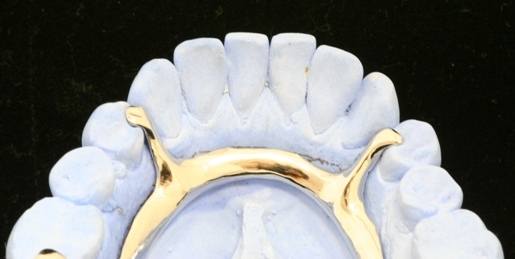
In a mandibular distal extension case, although the central incisors represent the ideal position for the indirect retainer perpendicular to the fulcrum line and would be ideal in theory, their use as abutments for indirect retainers is limited due to their weak structure and the steep inclination of their lingual surfaces.
Therefore, bilateral rests placed on the mesial marginal ridges of the first premolars are generally preferred over rests on the incisors. This approach not only avoids compromising a weak, single-rooted tooth, but also prevents tongue irritation by allowing the minor connector to be positioned between the canine and premolar rather than between the canine and incisor. Thus, even though the bilateral mesial occlusal rests on the first premolars are closer to the axis of rotation, they are significantly more effective.
It’s crucial to keep in mind that not all rests serve as indirect retainers. To function as an indirect retainer, the rest needs to be placed far enough away from the fulcrum line.