
Posterior teeth
When selecting artificial teeth for the posterior region, it is important to ensure compatibility not only with the edentulous space but also with the size, alignment, and occlusal anatomy of the opposing natural or artificial teeth.
The most critical factor in the selection of posterior teeth is the size of the occlusal table. The lever force exerted by a distal extension removable partial denture on the abutment tooth and the residual ridge is largely influenced by the combined occlusal surface area of the prosthetic teeth. As the occlusal table increases in size, the load on the ridge and the stress on the abutment teeth will also increase. Although smaller teeth are less effective in grinding food, they transmit less stress to the denture base. Therefore, teeth should be narrow and sharp rather than broad and flat, as this allows them to cut food rather than crush it.
Porcelain or acrylic resin artificial teeth
Acrylic resin artificial teeth are the most commonly used posterior teeth in removable partial dentures. Due to the limited interocclusal space, when significant grinding is required, they do not become excessively weakened and do not cause abrasive effects on enamel or metal alloys. Anatomical teeth are typically preferred over semi-anatomic or non-anatomic teeth to establish the tubercle-fossa or tubercle-embrazure relationship with the occlusal surfaces of the opposing natural teeth. This is because the tubercles of anatomical teeth can be ground to achieve occlusion with opposing grooves and fossae.
Since porcelain teeth are known to have abrasive effects on enamel and metal alloys, the use of porcelain artificial teeth is not preferred when natural teeth or metal crowns are present in the opposing arch. Although the use of porcelain artificial teeth in removable partial dentures is limited for this reason, they may be preferred when porcelain or acrylic resin artificial teeth are present in the opposing arch.
Porcelain or acrylic resin veneers
Veneers are rarely used in the case of a missing maxillary first premolar or when the interocclusal space is limited.
Metal teeth
When there is a limited posterior space and the tooth is positioned in a location not visible in the mouth, metal teeth can provide excellent results (Figure 6-9).
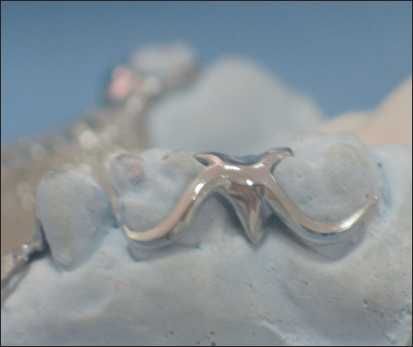
It is generally preferred for the restoration of the edentulous space of the first molar, which narrows due to the mesialization of the second molar in the lower jaw. The use of metal teeth is limited to edentulous areas with a mesiodistal width of 3-8 mm. When the metal framework is made of chromium-cobalt metal alloy, the abrasive effect of this metal should be considered, and excessive occlusion with the crown restoration or natural tooth opposing the metal tooth should be avoided.
Tube teeth
Tube teeth or tube teeth are relatively strong and aesthetic options for single tooth restorations in removable partial dentures (Figure 6-10).
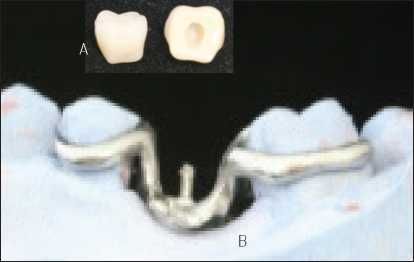
Belirli bir interokluzal mesafe gerektirmesine rağmen, dar posterior boşluklarda kullanılabilir. En sık kullanıldığı alan tek bir premolar dişin restorasyonudur.
Metal Pontics
In cases where there is a small tooth gap in the posterior region of the mandible, excessive atrophy of the residual ridge can sometimes lead to food accumulation between the teeth and the prosthesis. This problem typically arises when the teeth located mesially and distally to the gap tilt into the edentulous space, resulting in a smaller distance between the occlusal surface of the edentulous space and the adjacent residual ridge. When this gap is restored with an artificial tooth and acrylic base, spaces between the proximal surfaces of the teeth and the prosthesis can lead to food accumulation. Restoring these types of tooth gaps with occlusal surfaces cast as part of the metal framework can be a better solution for allowing the area to self-clean (Figure 6-11).
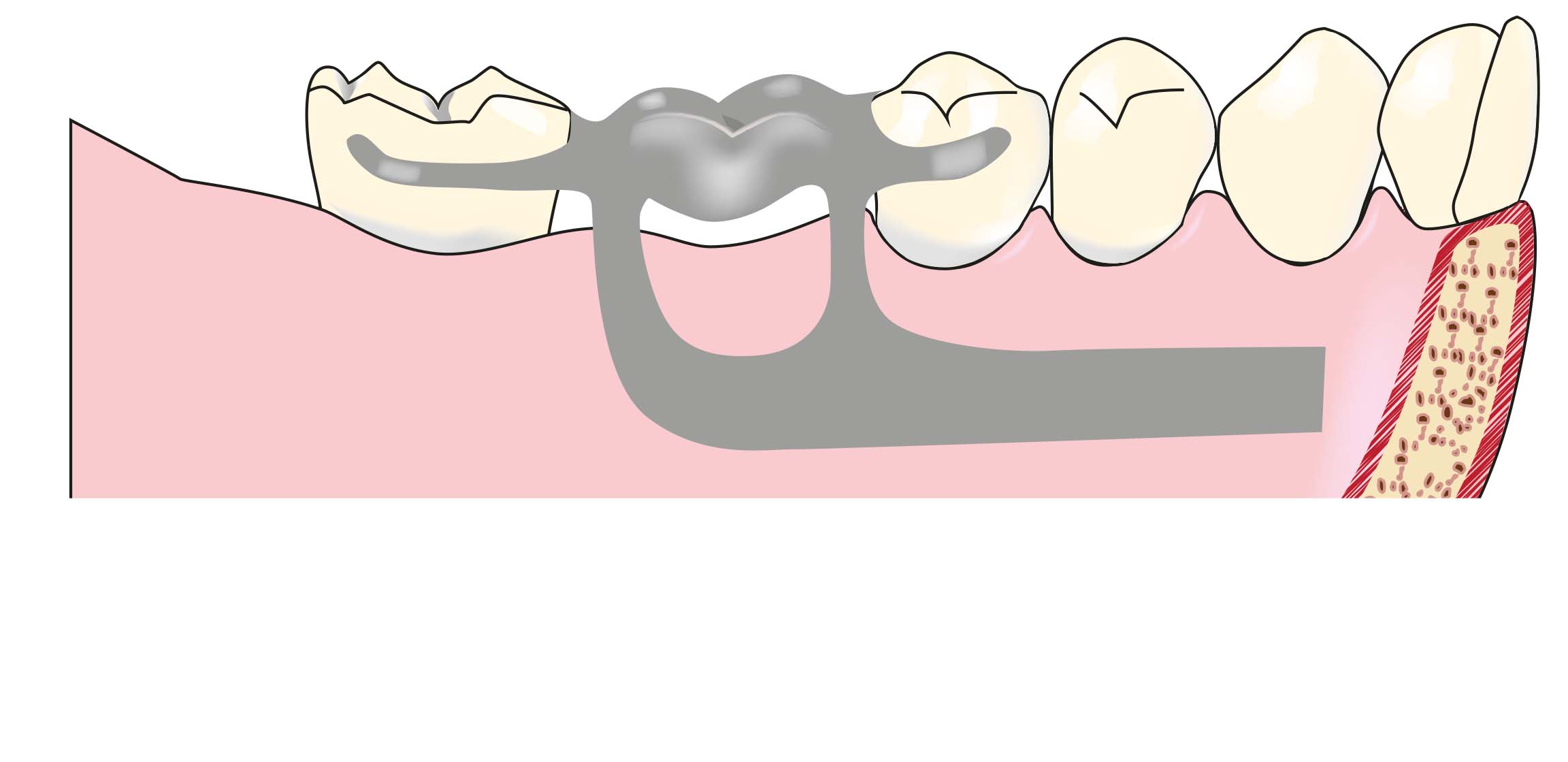
If aesthetics are important for the area to be restored and the edentulous space is small, the buccal surface of the metal pontic is opened during the framework modeling, and then acrylic is shaped in the color of the tooth to create acrylic-veneered metal pontics.