
Arrangements in the occlusal plane and alignment
The occlusal plane is frequently uneven in partially edentulous jaws because of the teeth’s malposition; the extent of this problem dictates the procedures that must be carried out. Adjustments at the enamel level can be used to realign the abutment teeth if the extrusion in the opposite posterior region is minimal. When extrusion is substantial, adjustments that go beyond the enamel level could necessitate crowns or onlays to restore the abutment tooth; in the event that pulp exposure occurs, root canal therapy is also required. Extraction is recommended when extrusion is too severe.
Teeth extrusion and tuber tuberosity in the maxillary posterior region reduce interarch distance and complicate prosthetic design (Figures 10-16).
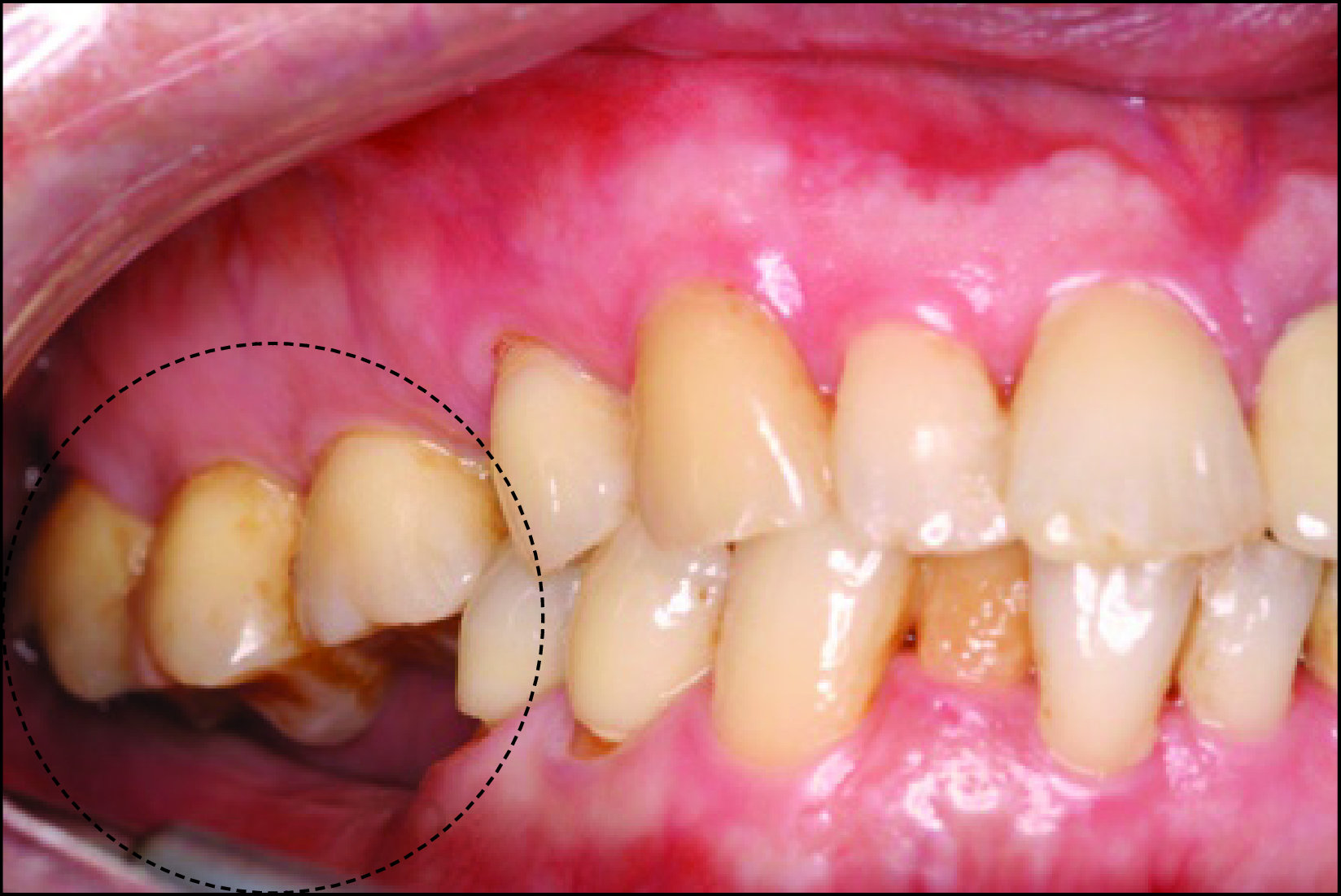
Depending on the severity of the problem, either the denture base is altered or the tuber’s lowering is surgically adjusted to make room for the prosthesis. The molar may tip mesially as a result of posterior tooth loss (Figure 10-17).
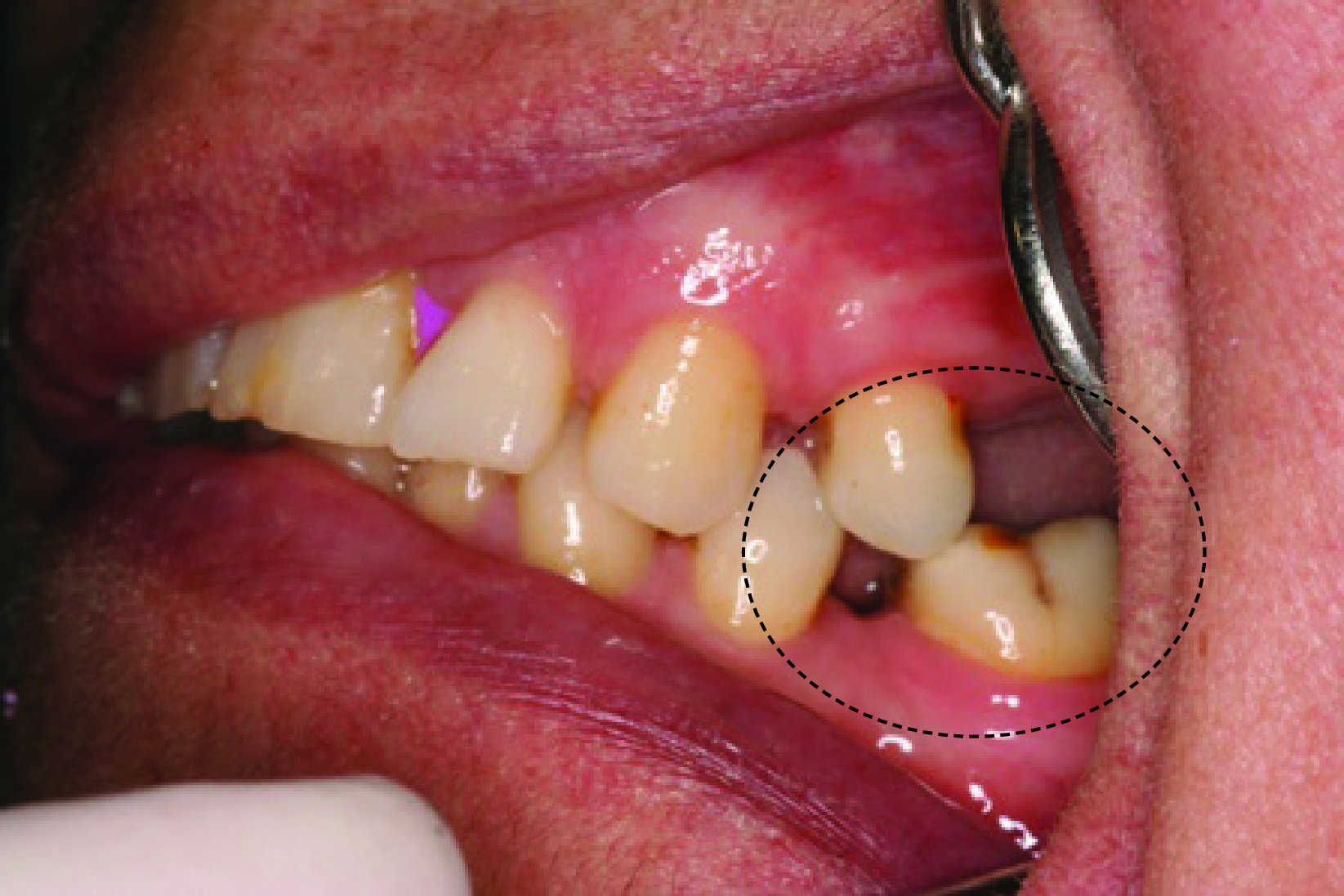
The ideal solution might be to realign the position of these teeth with orthodontic treatment. When the tilting is minor, the adjustment is achieved by abrasion at the enamel level. In more advanced problems, occlusal integrity is achieved with onlays and crowns.
The positioning or shape of the RPD components may be troublesome when there are malpositioned teeth in either the buccal or lingual direction. The prosthesis can be altered to correct a minor misalignment. Orthodontics is a solution to the issue of misaligned teeth. Alternative treatment methods are considered when the patient is unwilling to get orthodontic treatment or when the number, position, and periodontal support of the remaining teeth do not provide enough anchorage for orthodontic therapy.
When the misalignment is small, the axial surfaces of the misaligned tooth are reshaped at the enamel level to correct abnormalities. In moderate tooth misalignment, crown restoration is performed; in some cases, root canal treatment and post-core restoration may also be required. In advanced cases, tooth extraction may be necessary.