Esthetics
In determining the path of insertion, the position of the clasps and the arrangement of the artificial teeth are also evaluated aesthetically.
To achieve optimum aesthetics, the metal clasp arm should be minimally visible without compromising the stability and support necessary for the prosthesis, and the anterior teeth should be positioned as naturally as possible. To minimize the visibility of metal in the anterior region, it is recommended to adjust the tilt of the model, bringing the equator line closer to the gingival margin without compromising periodontal health. In individuals with a low smile line, bar clasp arms that approach from the gingiva provide a more advantageous position, while in some cases, circumferential clasps placed in the cervical area can be used. When the abutment teeth positioned in the posterior region are sufficient to provide retention for the prosthesis, clasps are not considered for the anterior region. To increase aesthetic success, bendable clasps can be used instead of cast clasps. While determining the insertion path to place clasps aesthetically, mechanical factors should not be ignored. However, when two insertion paths are available for the prosthesis, the one with higher aesthetic success is preferred.
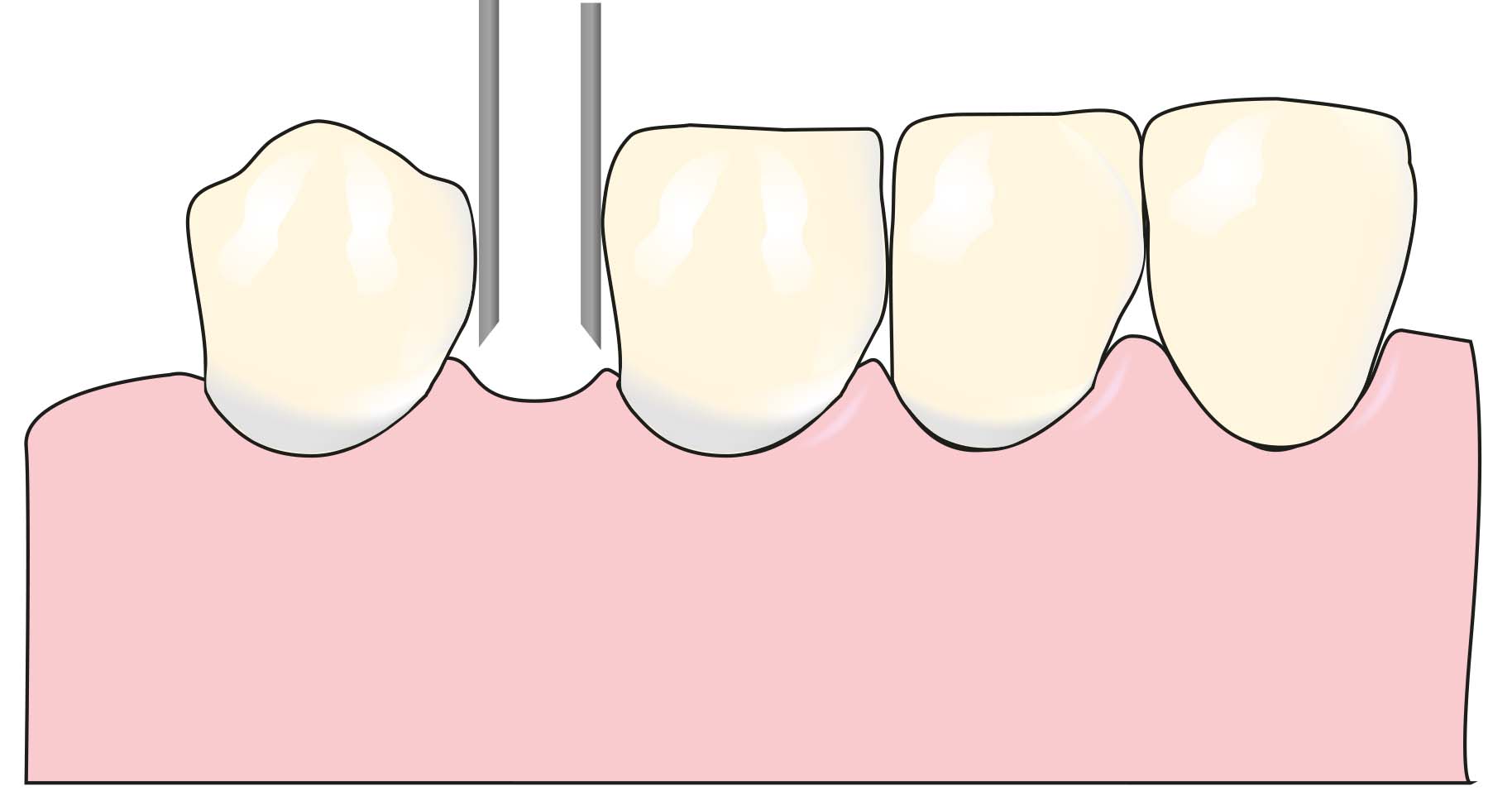
When lost anterior teeth are not immediately restored, the remaining teeth may tilt mesially, causing the existing space to narrow. The use of artificial teeth narrower than their true size will negatively affect the aesthetic outcome. Since the tooth surfaces adjacent to the edentulous space are typically bell-shaped and often tilted or rotated, the axial walls of these spaces are generally lacking in parallelism (Figure 7-9).
This situation not only jeopardizes the aesthetic success of the restoration but also leads to food accumulation, which can cause discomfort for the patient. The amount of preparation required to correct these surfaces is determined using the model analyzer. Another option to reduce the retentive areas is to give the cast a slight tilt posteriorly, which reduces the amount of preparation needed on the abutment teeth.