
Incisal rest
The incisal rest is a type of rest placed on the distal incisal angles of anterior teeth in a way that does not interfere with the opposing occlusion and preserves esthetics. It is primarily used on mandibular canines and, in some cases, on central and lateral incisors (Figure 2-10).
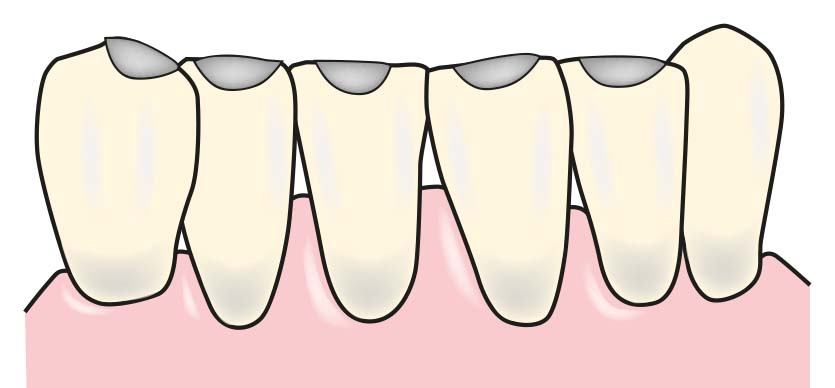
The correct position for placing incisal rests on mandibular canines is determined based on the wear pattern of the tooth. Abrasion may have altered the shape of the incisal edge, and the rest must not interfere with the opposing occlusion. Since close occlusal contact in this region is uncommon, the rest location is selected according to the available interincisal space.
Due to esthetic concerns and the risk of occlusal interference with mandibular anterior teeth, incisal rests are rarely used on maxillary anterior teeth.
The most significant disadvantage of incisal rests is their lack of esthetics. When alternative options are available, incisal rests—which cause metal to be visible on anterior teeth—are generally avoided. Because of their position relative to the tooth’s center of rotation, they tend to exert greater torque on the abutment tooth. Additionally, as they cover more of the tooth surface, they are more likely to cause discomfort to the tongue.
Incisal rests are placed into prepared rest seats located at the incisal angles of anterior teeth (See Mouth Preparation; Chapter 10).