
Fulcrum lines according to the structural elements of the prosthesis
The primary fulcrum line in distal-extension prostheses, which lies between the primary abutment teeth on either side of the dental arch, is also named according to prosthetic components (Figure 1-8).
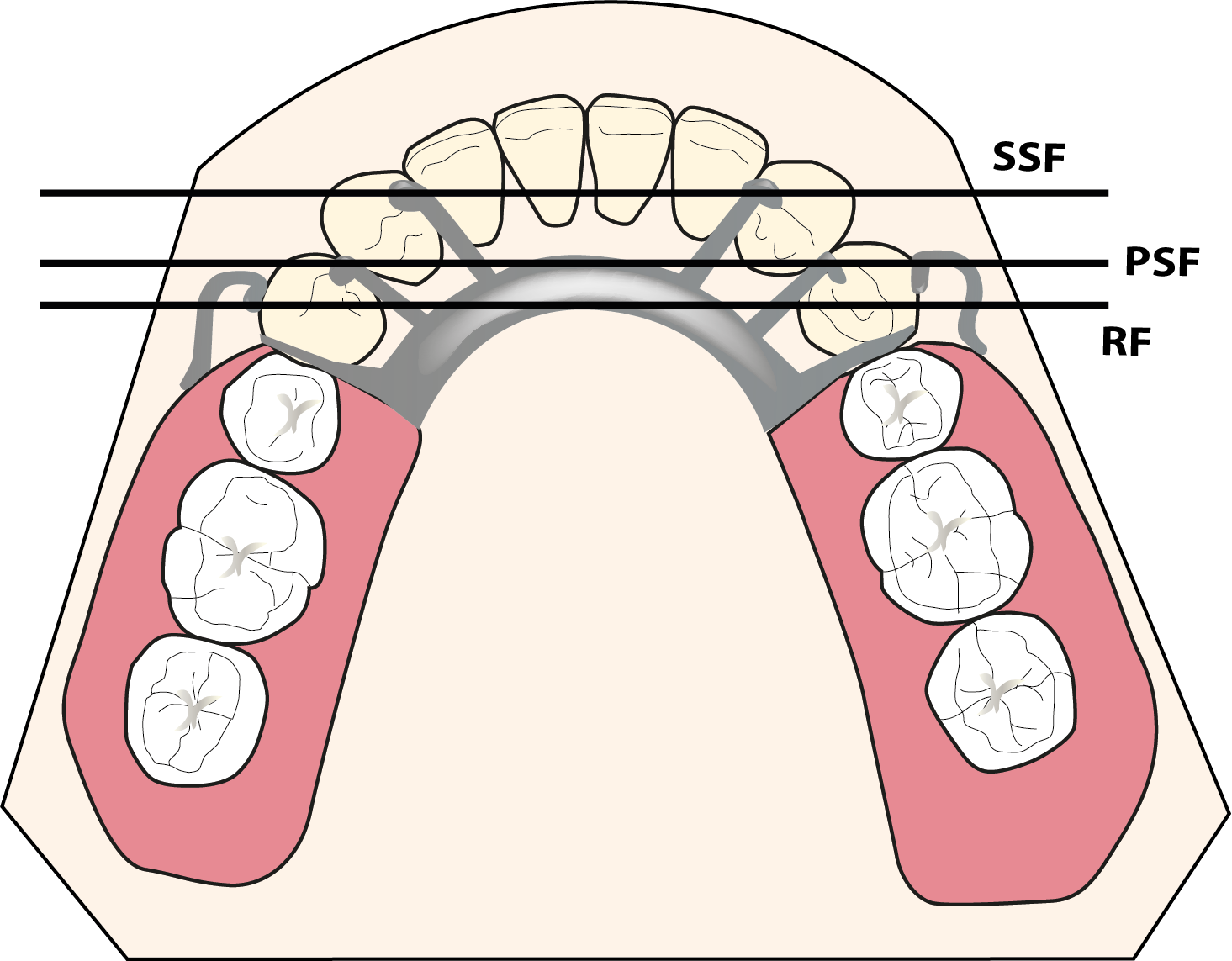
The retentive fulcrum (RF) line, which passes through the tip of the retentive clasp arm on the abutment teeth, is formed by forces that cause the denture base to move away from the tissue.
The other fulcrum lines, which passes through the principal occlusal rests on the primary abutment teeth, is generated by chewing forces in the occlusogingival direction and is called the primary stabilizing fulcrum (PSF) axis. If it passes through the occlusal rests located on the secondary abutment tooth used for indirect retention, it is called the secondary stabilizing fulcrum (SSF) axis.
When occlusal load is applied to the distal extension denture base, rotation around the PSF axis, which passes through the occlusal rests on the abutment teeth, causes the denture base to be displaced toward the underlying supporting tissues and the anterior region of the removable partial denture to rotate upward (Video 1-9).
When the distal extension denture base rotates away from the tissue due to the effect of sticky foods or gravity, the primary fulcrum axis shifts from the occlusal nails to the retentive end of the clasps, and is called the retentive fulcrum (RF) axis. The anterior region of the denture rotates apically towards the tissue in the form of sinking (Video 1-10).
The soft tissues of the floor of the mouth underneath the lingual bar sustain unintended damage as a result of this rotation movement around the RF axis. A rest that is positioned in front of the fulcrum line and serves as an indirect retenair can successfully prevent this undesired rotation movement. In this situtaion, the fulcrum of the rotation movement away from the tissue slides from the retentive clasp tip to the rest in the anterior region and is called the secondary stabilizing fulcrum (SSF) line (Video 1-11).